
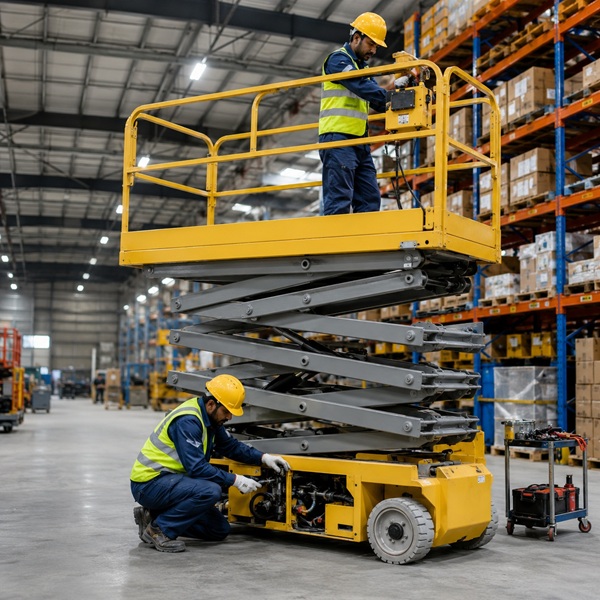
AWP Maintenance Checklist: How to Extend the Life of Your Scissor Lift in India
A scissor lift breaking down in the middle of warehouse operations is more than just a maintenance issue. It stops work, delays projects, increases repair costs, and creates serious safety risks for operators. In many Indian factories and warehouses, aerial work platforms are used daily for maintenance, installation, inventory work, and overhead operations. But poor servicing habits often lead to battery failure, hydraulic leakage, sudden stoppages, and expensive downtime.
This is why scissor lift maintenance India has become an important concern for facility managers, warehouse operators, and industrial maintenance teams. Preventive maintenance is not just about keeping the machine clean. It directly affects operator safety, equipment lifespan, battery performance, and productivity.
Battery-operated self-propelled scissor lifts are designed for long-term industrial use, but like any machine, they require regular inspection and proper care. A simple daily check can prevent costly breakdowns and extend the life of your aerial work platform significantly.
Why Regular Scissor Lift Maintenance Is Important
Many scissor lift failures happen because of neglected maintenance. Small problems like low hydraulic oil, dirty battery terminals, or worn hoses often become major repair issues when ignored for weeks.
Regular maintenance improves operator safety by ensuring that critical systems such as brakes, emergency lowering functions, tilt sensors, and alarms work properly. It also helps reduce unexpected downtime, which is a major problem in warehouses and factories operating on tight schedules.
A properly maintained electric scissor lift offers:
- Better battery performance
- Lower operating costs
- Longer machine lifespan
- Improved lifting efficiency
- Safer working conditions
- Reduced repair frequency
Manufacturers and safety standards recommend routine inspections because aerial work platforms operate under heavy loads and elevated working conditions. Improper maintenance can lead to avoidable failures, unstable platform movement, or even workplace accidents.
In Indian industrial environments where dust, heat, and long operating hours are common, preventive maintenance becomes even more important.
Daily AWP Inspection Checklist Before Operation
Daily inspection is one of the simplest ways to avoid major breakdowns. Operators should inspect the machine before every shift to identify visible issues early.
Check Battery Charge Levels
Battery performance directly affects lift operation. Deep battery discharge reduces battery life and can damage internal components over time.
Operators should:
- Charge the machine properly after every shift
- Avoid running the battery until completely drained
- Check for loose battery connections
- Inspect terminals for corrosion
In facilities operating multiple shifts, poor charging habits are one of the most common reasons for scissor lift failure.
Inspect Hydraulic Oil Leaks
Hydraulic systems power the lifting function of the machine. Even a small leak can affect lifting performance and create safety risks.
Check:
- Hydraulic hoses
- Cylinders
- Pipe fittings
- Oil levels under the machine
If oil stains appear near the lift regularly, the machine should be inspected immediately.
Test Emergency Controls
Emergency systems should always be operational before work begins.
Test:
- Emergency stop button
- Emergency lowering system
- Warning alarms
- Control responsiveness
These systems become critical during power failure or unstable platform movement.
Inspect Non-Marking Tires
Many indoor scissor lifts use solid non-marking tires for warehouses, malls, and factories.
Inspect for:
- Excessive wear
- Cuts or cracks
- Embedded debris
- Uneven tire condition
Damaged tires affect machine stability and maneuverability.
Check Platform Guardrails and Entry Gates
Loose guardrails increase the risk of falls during elevated work.
Inspect:
- Loose bolts
- Damaged rails
- Entry gate locking system
- Platform flooring condition
Verify Tilt Sensors and Safety Alarms
Tilt sensors help prevent unsafe lifting on uneven surfaces. This is especially important in industrial areas where floors may not be perfectly level.
Always confirm that alarms and indicators are functioning properly before operation.
Practical Operator Tip
Many factories use a printed inspection sheet near the charging area. This helps operators perform the same safety checks every day without missing important points.
Weekly Maintenance Checks for Scissor Lifts
Daily inspections help identify visible issues, but weekly servicing focuses on machine performance and wear prevention.
Start by checking battery water levels if the machine uses lead-acid batteries. Low water levels can reduce charging efficiency and damage batteries permanently.
Inspect the hydraulic fluid condition carefully. Dirty or contaminated hydraulic oil can affect lifting smoothness and increase wear on internal components.
Lubrication is also important. Moving parts such as pivot points and scissor arm joints should be lubricated regularly to reduce friction and prevent rust formation.
Brake testing should never be skipped. Electromagnetic brakes must hold the machine securely, especially during elevated operation.
Operators should also inspect:
- Battery charger condition
- Electrical cables
- Scissor arm movement
- Extension deck operation
In Indian factories and warehouses, dust accumulation is a common issue. Dust can affect electrical systems, moving components, and cooling efficiency. Cleaning the machine regularly helps prevent long-term damage.
Monthly Preventive Maintenance Checklist
Monthly inspections should be more detailed and preferably handled by trained technicians.
Structural inspection is important because scissor lifts operate under continuous stress and load.
Monthly checks should include:
- Weld crack inspection
- Hydraulic hose wear
- Structural frame condition
- Electrical wiring inspection
- Platform extension testing
- Drive motor inspection
- Corrosion prevention checks
Machines used outdoors should be inspected carefully for rust and moisture damage, especially during monsoon seasons.
Professional technicians can also identify early signs of mechanical wear that operators may miss during daily inspections.
Common Scissor Lift Problems and Their Causes
Many scissor lift issues start with small warning signs. Understanding these problems early can help avoid complete breakdowns.
Lift Not Charging Properly
This is one of the most common issues in electric scissor lifts.
Possible causes include:
- Damaged battery charger
- Battery sulfation
- Loose terminals
- Poor charging practices
If the machine frequently loses power during operation, the charging system should be inspected immediately.
Platform Moving Slowly
Slow lifting or driving usually indicates:
- Low hydraulic oil
- Weak batteries
- Clogged hydraulic filters
- Worn hydraulic components
Ignoring slow performance often leads to bigger hydraulic system failures later.
Lift Stops During Elevation
This problem is commonly linked to:
- Overload system activation
- Tilt sensor warning
- Low battery voltage
- Electrical faults
Operators should never bypass safety systems to continue operation.
Hydraulic Oil Leakage
Hydraulic leaks usually occur because of:
- Worn hoses
- Damaged seals
- Loose fittings
- High-pressure system wear
Even small leaks should be repaired quickly to avoid pressure loss and contamination.
Best Practices to Extend the Life of Your Scissor Lift
Machine lifespan depends heavily on daily operating habits.
- Avoid overloading the platform beyond the recommended capacity. Excess weight puts unnecessary pressure on hydraulic systems, scissor arms, and motors.
- Always use the machine on flat and stable surfaces. Uneven floors increase stress on the structure and activate tilt safety systems frequently.
- Proper battery charging is equally important. Batteries should be charged fully and never left in discharged condition for long periods.
- Keeping the machine clean also improves reliability. Dust, debris, and oil buildup affect moving parts and electrical systems over time.
- Operator training plays a major role in maintenance. Many breakdowns happen because of improper operation rather than manufacturing defects.
- Following scheduled service intervals and storing machines indoors whenever possible can significantly increase equipment lifespan and resale value.
Battery Maintenance Tips for Electric Scissor Lifts
Battery care is one of the most important parts of electric aerial work platform maintenance.
In India, summer heat and long operating hours often reduce battery efficiency faster than expected.
To improve battery life:
- Charge batteries overnight
- Avoid complete battery discharge
- Clean battery terminals regularly
- Check water levels in lead-acid batteries
- Keep charging areas ventilated
- Prevent overheating during summer
Warehouses operating multiple shifts should monitor charging cycles carefully because frequent partial charging can affect battery health over time.
A healthy battery system improves machine reliability, lifting performance, and operational efficiency.
Safety Risks of Poor AWP Maintenance
Poor maintenance increases the risk of serious workplace accidents.
A neglected scissor lift may experience:
- Tipping risks
- Brake failure
- Hydraulic collapse
- Electrical hazards
- Sudden platform instability
These issues become extremely dangerous when operators are working at height.
This is why scheduled inspections and trained operators are critical for safe aerial work platform operation.
Safety systems should never be ignored or bypassed, even during urgent maintenance work.
When Should You Call a Professional AWP Service Team?
Some issues require immediate technical inspection.
Call a professional service team if you notice:
- Recurring hydraulic leaks
- Electrical failures
- Abnormal noises
- Unstable platform movement
- Sudden battery drainage
- Frequent alarm activation
Delaying repairs often increases damage and repair costs.
Professional servicing also helps maintain machine safety standards and operational reliability.
Why Preventive Maintenance Saves Money
Many companies delay servicing to reduce short-term costs, but this usually leads to expensive breakdowns later.
Preventive maintenance reduces:
-
Emergency repair expenses
-
Unexpected downtime
-
Battery replacement frequency
-
Hydraulic system failures
For example, a warehouse using scissor lifts for inventory operations may lose several working hours if one machine stops unexpectedly during peak operations.
Regular maintenance keeps equipment reliable and improves overall productivity.
It also increases resale value because well-maintained machines experience less structural and mechanical wear.
Conclusion
Aerial work platforms are essential for modern warehouses, factories, malls, and industrial facilities. But their performance and safety depend heavily on regular maintenance.
Simple inspections, proper charging habits, hydraulic checks, and scheduled servicing can prevent major breakdowns and extend the life of your scissor lift significantly.
Preventive maintenance not only improves machine reliability but also reduces downtime, repair costs, and workplace safety risks.
For long-term performance, always follow manufacturer-recommended servicing schedules and ensure inspections are handled by trained professionals.
